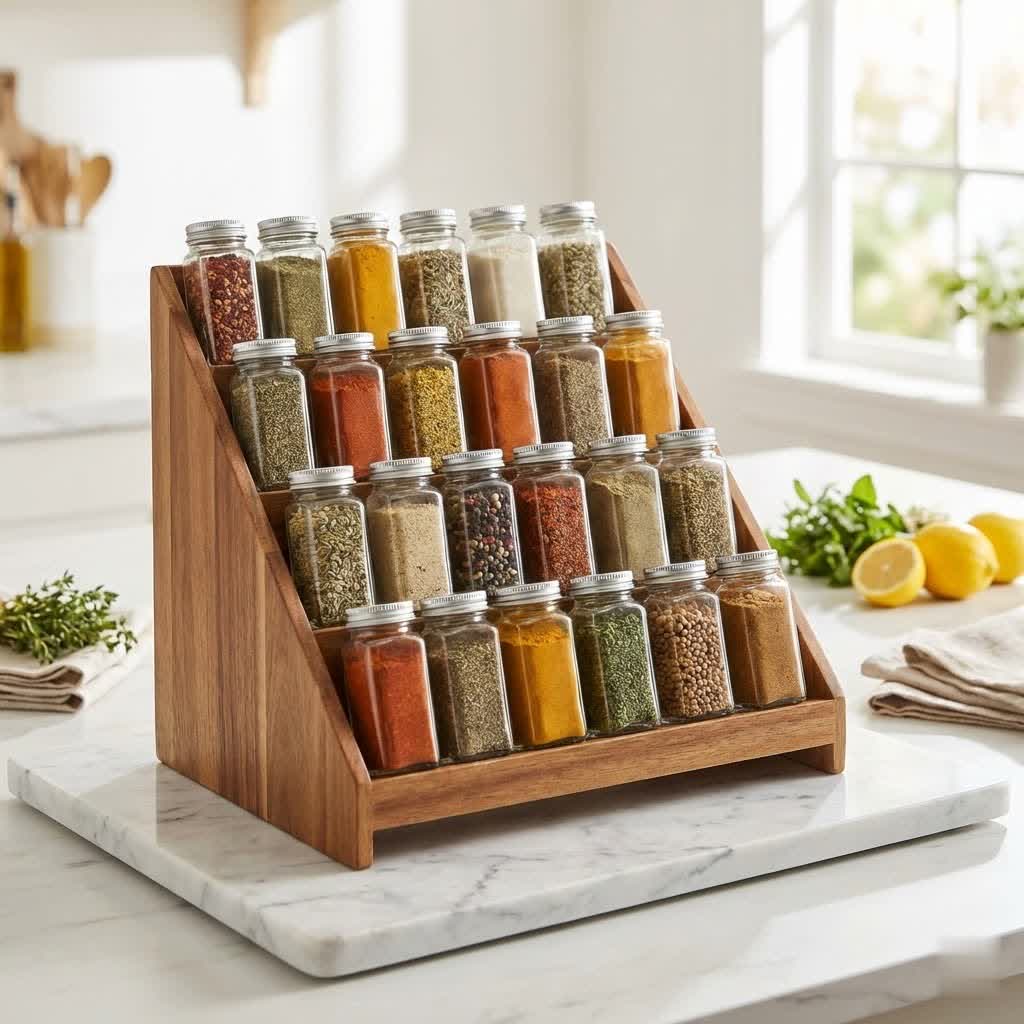
Introduction
- Hook: Disorganized spices are a common kitchen woe.
- Introduce woodworking spice racks as an elegant, practical solution.
- Briefly state what the article will cover: types, materials, design, building tips, and maintenance.
Wooden Spice Racks: Optimizing Your Kitchen Space
Popular Types of Wooden Spice Racks
- Wall-Mounted Spice Racks:
- Pros: Saves countertop space, keeps spices visible and accessible, can be a decorative element. Heirloom Products offers wall-mounted options in various sizes and wood types like walnut, oak, and maple, emphasizing solid wood and generational quality.
- Cons: Requires drilling into walls, permanent fixture, limited by wall space.
- Best for: Small kitchens, those who prefer clear countertops, displaying aesthetically pleasing spice jars.
- Countertop Spice Racks:
- Pros: Portable, easy to access, no installation required. The “FixThisBuildThat” DIY plan offers a simple stair-step tiered design, perfect for keeping spices visible.
- Cons: Occupies valuable counter space.
- Best for: Larger kitchens, renters, those who frequently rearrange their kitchen layout.
- Drawer Spice Organizers:
- Pros: Keeps spices hidden and tidy, protects spices from light, maximizes drawer space.
- Cons: Requires specific drawer dimensions, not all spices may fit, involves opening drawers for access.
- Best for: Minimalist kitchens, protecting spice longevity, maximizing cabinet interiors.
- Built-in/In-Cabinet Spice Racks:
- Pros: Seamless integration, takes advantage of unused space (e.g., between studs in a pantry wall), highly customized. Erin Zubot’s design uses walnut plywood for stability in a built-in alcove.
- Cons: Complex to build, requires precise measurements and potential wall modification, less flexible.
- Best for: Custom kitchens, maximizing vertical space within cabinets or walls, permanent solutions.
- Rotating Spice Racks (Lazy Susans):
- Pros: Easy access to all spices, utilizes corner spaces effectively.
- Cons: Can be bulky, may not fit all cabinet sizes, more complex joinery for a DIY project.
- Best for: Deep cabinets, pantries, those with a large spice collection.
Guide to Choosing the Right Wooden Spice Rack
- Determine Your Needs:
- Number of Spices: How many jars do you have? This dictates the size and capacity needed.
- Frequency of Use: Daily cooks might prefer easily accessible countertop or wall-mounted options.
- Measure Your Kitchen Space:
- Dimensions: Crucial for wall-mounted, built-in, and drawer organizers. Consider height, width, and depth. For instance, Heirloom Products offers wall-mounted racks with standard (2.75″) and deluxe (3.75″) depths.
- Location: Countertop, inside a cabinet door, pantry wall, or between studs.
- Select the Right Wood Material:
- Hardwoods (Walnut, Oak, Maple, Cherry, Hickory): Known for durability, beautiful grain, and longevity. Excellent for heirloom quality pieces. Maple is known for durability and light color, while walnut offers a rich, dark tone. Oak provides distinct grain texture.
- Softwoods (Pine, Poplar, Cedar): Easier to work with for beginners, more affordable, but may be less resistant to dents. Poplar is suitable for painted finishes. Cedar offers natural aroma and moisture resistance. “FixThisBuildThat” uses poplar for a simple tiered rack.
- Plywood: Stable and flat, less prone to warping than solid wood, cost-effective, good for larger panels or built-in structures. Often faced with veneers of desired wood species.
- Safety: Ensure any finishes or glues are food-safe or appropriate for kitchen environments.
- Consider Style and Design:
- Aesthetics: Match your kitchen’s decor (rustic, modern, farmhouse).
- Functionality: Easy visibility, secure storage, and effortless access.
- Budget:
- DIY projects generally cost less (materials + tools).
- Pre-made or custom solid wood racks from companies like Heirloom Products can range from $200-$400+ depending on size and wood type.
Comparison Table: Types of Wooden Spice Racks
|
Our Picks for the Best Spice Rack in 2026
As an Amazon Associate I earn from qualifying purchases.
|
||
| Num | Product | Action |
|---|---|---|
| 1 | Cabinet Caddy SNAP! Spice Rack Organizer for Cabinet - Slide & Rotate Seasoning Organizer - 4 Snap-In Adjustable Shelves for 5 Tier of Storage - Magnetic Modular Design - 8.9”H x 6.1”W x 10.8”D |

|
| 2 | HOOBRO 4-Tier Spice Rack, Seasoning Organizer, Stackable Spice Rack Organizer, Spice Jar Storage Organizer, for Kitchen, Cupboard, Countertop, Black BK48TL01 |
|
| 3 | Oizeir Clear Spice Rack (2-Pack) – 3-Tier Acrylic Organizer for Cabinet – Deep Spice Shelf – 10.4 x 9.6 x 4 Inches – Holds Seasoning and Condiments |
|
| 4 | Kamenstein 20 Jar Revolving Countertop Spice Rack with Spices Included, FREE Spice Refills for 5 Years, Polished Stainless Steel with Black Caps, 30020 |
|
| 5 | 4 Pack Magnetic Spice Storage Rack Organizer for Refrigerator and Oven, Bronze Fridge Organizers and Storage |
|
| 6 | Metal 4 Pack Magnetic Spice Storage Rack Organizer for Refrigerator and Oven, Black Fridge Organizers and Storage |
|
| 7 | 4 Pack Magnetic Spice Storage Rack Organizer for Refrigerator and Oven, Blue Fridge Organizers and Storage |
|
| 8 | Bamboo Spice Rack Cabinet Organizer - 3 Tier Wooden Expandable Walnut Display Shelf |
|
| 9 | Spice Rack Kitchen Cabinet Organizer- 3 Tier Bamboo Expandable Display Shelf Yellow |
|
| 10 | Spice Rack Organizer For Cabinet - 3 Tier Black Bamboo Wooden Expandable Display Shelf from 12.70 to 22.20 inch |
|
| Type of Rack | Advantages | Disadvantages | Best Suited For | Material Considerations |
|---|---|---|---|---|
| Wall-Mounted | Saves counter space, visible access, decorative | Permanent installation, limited by wall space | Small kitchens, displaying spices, renters (if removable) | Solid hardwoods for durability, lighter woods for painted finishes |
| Countertop | Portable, easy to build, immediate access | Occupies counter space | Larger kitchens, frequent cooks, flexible setups | Any wood type, often chosen for aesthetic match to kitchen |
| Drawer Organizer | Hidden storage, protects spices, sleek aesthetic | Requires drawer space, less immediate visibility | Minimalist kitchens, preserving spice potency | Plywood for base, thinner solid wood dividers |
| Built-in | Seamless, maximizes unused space, highly customized | Complex installation, permanent | Custom kitchens, new builds, long-term solutions | Plywood for stability, veneer for desired wood look |
| Rotating | Full access to all spices, utilizes corner space | Can be bulky, more complex joinery | Deep cabinets, pantries, large spice collections | Durable hardwoods for smooth rotation, stable base |
Top Woodworking Spice Rack Designs and Features
When crafting or commissioning a woodworking spice rack, certain designs stand out for their blend of practicality and aesthetic appeal:
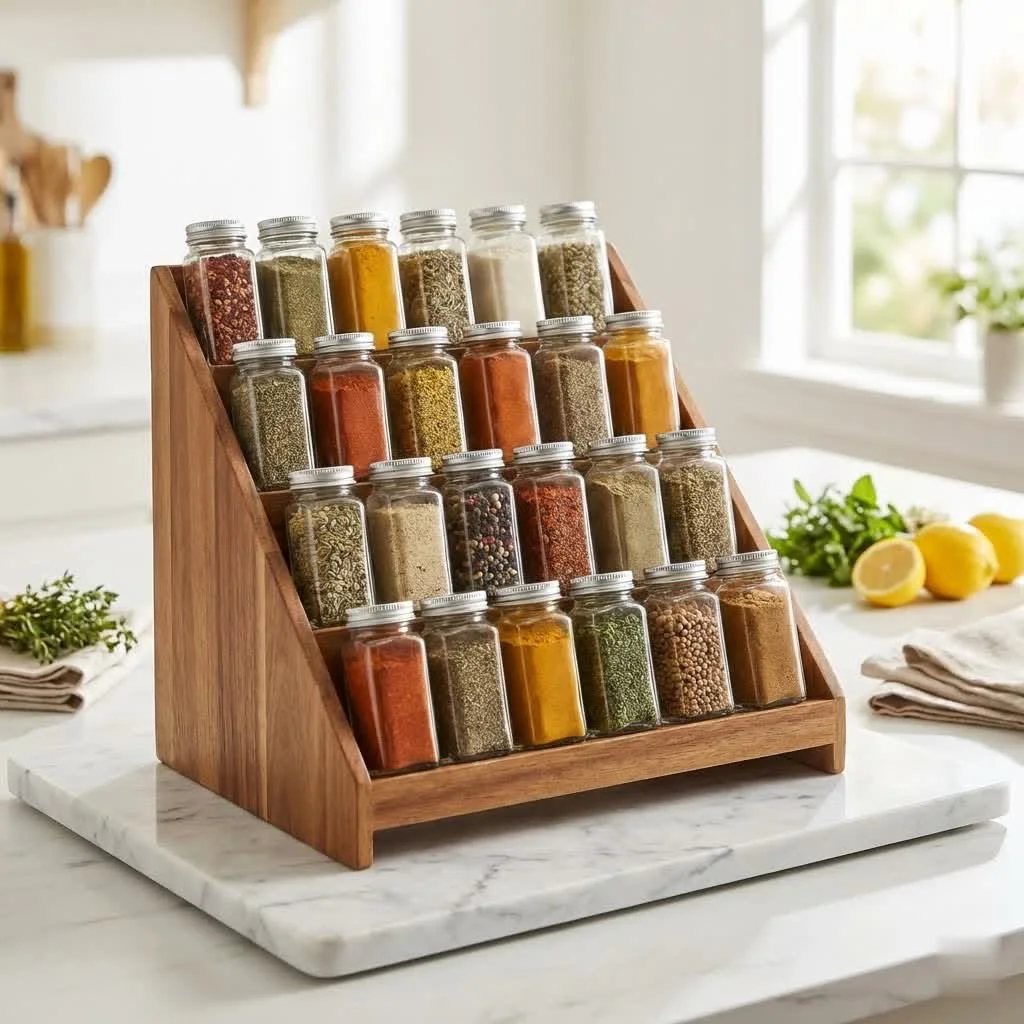
- Tiered Stair-Step Racks: This popular design, as seen in the “FixThisBuildThat” plan, allows for easy visibility and access to spices by elevating each row. It’s straightforward for DIYers and can be adapted for countertops or drawers.
- Railed Wall-Mounted Shelves: Simple wooden shelves with a thin rail (often a wooden dowel or metal rod) prevent jars from falling off. These can be rustic or modern depending on the wood and finish.
- Modular Systems: Designs that allow for expansion or reconfiguration, often using interlocking wood pieces or individual “cubbies” that can be stacked or arranged.
- Pull-Out Drawer Inserts: Custom-fitted wooden inserts for kitchen drawers that hold spice jars at an angle for easy reading of labels. These are excellent for a streamlined look.
- Door-Mounted Organizers: Slim wooden racks designed to fit on the inside of pantry or cabinet doors, utilizing often-wasted vertical space.
Key Features to Look For (or Incorporate):
- Adjustable Shelving: Allows for accommodating different spice jar heights.
- Secure Railings/Retainers: Essential to prevent jars from tipping, especially on wall-mounted or door-mounted units.
- Durable Finish: Protects the wood from moisture and grease, extending its lifespan. Beeswax coating is noted for Heirloom Products’ solid wood racks.
- Hidden Fasteners: For a cleaner, more professional look, techniques like pocket holes (Kreg Jig) or dovetail joints are preferred.
- Optimal Depth: Ensure shelves are deep enough for your spice jars but not so deep that jars get lost behind others.
Where to Acquire or Source Your Woodworking Spice Rack
- For DIY Enthusiasts:
- Lumber Yards & Hardware Stores: Purchase raw wood (e.g., poplar, pine, oak, maple, plywood) from local suppliers like Lowe’s. [cite: 5 in initial search]
- Online Woodworking Stores: For specialty woods or pre-cut components.
- Free Plans & Tutorials: Websites like FixThisBuildThat, Woodshop Junkies, and Kreg Tool offer free downloadable plans and step-by-step guides. YouTube channels are also a great resource.
- Scrap Wood: Utilizing reclaimed or scrap wood (like pine or cedar fence boards) is a sustainable and cost-effective option for smaller projects. [cite: 5 in initial search, 3 in initial search]
- For Custom-Made Options:
- Artisan Woodworkers & Etsy Shops: Many independent craftspeople create personalized wooden spice racks to your exact specifications. Look for solid wood construction and quality craftsmanship.
- Specialized Companies: Brands like Heirloom Products offer high-quality, handmade solid wood spice racks in various sizes and premium wood types (Walnut, Oak, Maple, Hickory). They emphasize generational quality and offer custom sizing.
Using and Maintaining Your Wooden Spice Rack
- Organizing Your Spices:
- Alphabetical Order: A classic method for quick searching.
- By Cuisine/Frequency of Use: Grouping spices used together or most often.
- Consistent Jar Sizes: Using uniform jars creates a neat appearance and maximizes space.
- Cleaning and Hygiene:
- Regular Dusting: Wipe down shelves with a soft, dry cloth.
- Gentle Cleaning: For spills, use a damp cloth with mild soap, then immediately dry thoroughly. Avoid harsh chemicals or excessive moisture, which can damage wood and its finish.
- Preserving Wood Quality:
- Avoid Direct Sunlight & Heat: Prolonged exposure can dry out and warp wood, and degrade spices.
- Apply Wood Conditioner/Oil: Periodically reapply a food-safe wood conditioner or mineral oil (especially for unfinished or oil-finished racks) to prevent drying and cracking. For polyurethane finishes, a simple polish can suffice. Heirloom Products uses a beeswax protective coating.
- Protect from Moisture: Ensure the rack is not constantly exposed to steam or water.
Buying Guide: Key Considerations for Your Wooden Spice Rack
When investing in a wooden spice rack, whether buying or building, keep these critical factors in mind:
- Food-Safe Materials and Finishes: For any part that might come into direct contact with food or spices (even indirectly through jar exteriors), ensure the wood and its finish are non-toxic. Natural oils or water-based polyurethanes are often good choices.
- Load-Bearing Capacity: A well-built wooden rack should comfortably hold the weight of all your spice jars without sagging or becoming unstable. This is especially important for wall-mounted units. Solid wood construction inherently offers good strength.
- Ease of Cleaning: Designs with smooth surfaces and minimal nooks and crannies are easier to wipe down, preventing dust and grime buildup.
- Appropriate Dimensions: Measure your available space and your spice jars precisely. A custom fit ensures maximum efficiency and a polished look. Remember that a typical spice jar diameter is around 2 inches, though larger jars exist (Heirloom Products accommodates up to 2 1/8″ or 4 1/8″ for double depth).
- Value for Money: Consider the long-term durability and aesthetic appeal. While a DIY project can save money, a high-quality, solid wood rack from a reputable maker offers lasting value and craftsmanship.
Conclusion
A thoughtfully chosen or expertly crafted woodworking spice rack is more than just storage; it’s an investment in kitchen organization, efficiency, and aesthetic appeal. From the rustic charm of a pine countertop unit to the elegant integration of a built-in walnut organizer, the world of wooden spice racks offers endless possibilities to declutter your culinary space. By understanding the various types, selecting appropriate materials, and considering essential design elements, you can transform your kitchen into a more functional and inviting haven.
Ready to embark on your woodworking journey or find the perfect artisan-made piece? What wooden spice rack design will best elevate your kitchen’s style and utility?
Frequently Asked Questions
What type of wood is best for a DIY spice rack?
Durable hardwoods like walnut, oak, and maple are excellent for longevity and aesthetic appeal, though they can be more challenging to work with for beginners. Softer woods such as pine, poplar, or cedar are more affordable and easier to cut, making them ideal for DIY projects, especially if you plan to paint the rack. Plywood is also a stable and cost-effective option, particularly for larger panels or built-in designs.
How do I determine the right dimensions for my wooden spice rack?
First, measure the height, width, and depth of your available space (e.g., cabinet interior, wall section, countertop area). Next, gather your spice jars and measure their height and diameter. Ensure your shelves are deep enough for the jars without wasting space and that there’s adequate clearance between shelves for easy removal. For wall-mounted or built-in racks, consider standard stud spacing (typically 14.5 inches between studs) if you plan to mount it into the wall.
How can I make my wooden spice rack food-safe?
To ensure your wooden spice rack is food-safe, choose untreated wood or wood treated with food-safe oils (like mineral oil or beeswax). If using glue, opt for FDA-approved food-safe wood glues. For finishes, water-based polyurethanes, shellac, or natural oil finishes are generally safe once fully cured. Always allow adequate curing time for any finish before storing spices.
Can I build a wooden spice rack with basic woodworking tools?
Yes, many simple wooden spice rack designs can be built with basic hand tools such as a hand saw, hammer, drill, and clamps. Projects like tiered countertop racks or basic wall shelves are often beginner-friendly. More complex designs or those requiring precise joinery might benefit from power tools like a miter saw, table saw, or Kreg Jig, but they are not always essential.
How do I maintain a wooden spice rack to prolong its life?
Regular maintenance involves dusting with a soft cloth and wiping spills immediately with a damp cloth, then drying thoroughly. To nourish the wood and prevent drying or cracking, periodically apply a food-safe wood conditioner or mineral oil, especially for natural wood finishes. Avoid placing the rack in direct sunlight or near heat sources to prevent warping and discoloration.
Cooking gear we tested in our own kitchens
Free PDF — preheat times measured on 10 popular air fryers.
