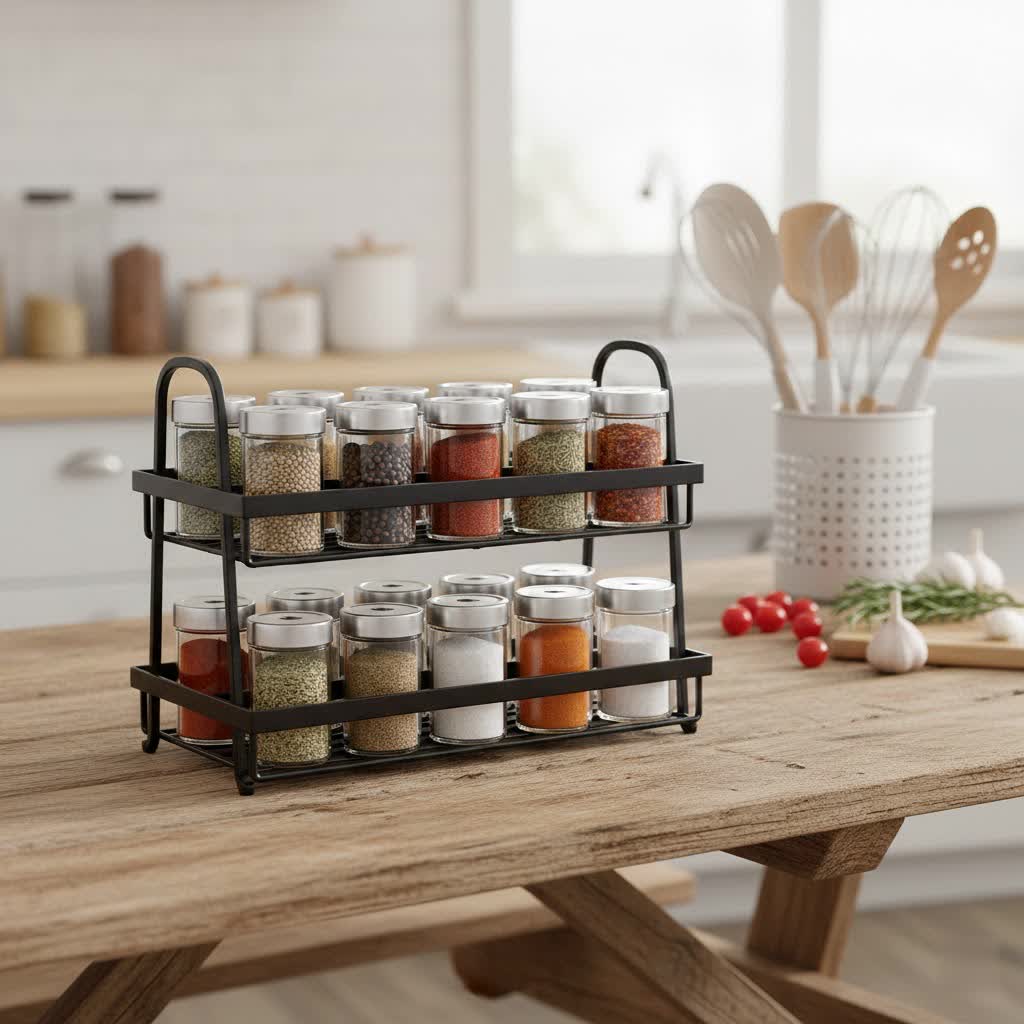
Imagine a kitchen where every spice is instantly at your fingertips, no more frantic searching or tumbling jars. For many home cooks, a cluttered spice cabinet is a daily frustration, turning meal preparation into a treasure hunt. An efficiently organized spice collection isn’t just about aesthetics; it’s about saving time, reducing stress, and enhancing your culinary flow. By selecting the right Kitchen Cabinet Spice Rack, you can transform a chaotic corner into a functional, inspiring space. This comprehensive guide will explore various spice rack types, offer expert advice on choosing the perfect fit for your kitchen, and provide essential tips for maintaining a beautifully organized spice collection.
Common Types of Kitchen Cabinet Spice Racks
The market offers a diverse range of spice racks designed to fit various cabinet configurations and kitchen layouts. Understanding the pros and cons of each type is the first step toward creating your ideal spice storage solution.
Pull-Out Spice Racks
Pull-out spice racks are a game-changer for deep base cabinets, transforming what can often be a dark, inaccessible space into a highly organized system. They typically feature multiple tiers or shelves that slide out completely, bringing all your spices into view.
- Pros: Offer superior visibility and easy access to every jar, preventing items from getting lost at the back. Ideal for maximizing storage in deep, narrow cabinet spaces, often found next to the stove.
- Cons: Generally more expensive and require installation. They also demand a specific cabinet width (typically 6-12 inches) to function properly.
- Best Suited For: Home cooks with a large spice collection and deep base cabinets, or those seeking a seamless, integrated look.
|
Our Picks for the Best Spice Rack in 2026
We may earn a commission when you use one of our links to make a purchase.
|
||
| Num | Product | Action |
|---|---|---|
| 1 | Spice Rack Kitchen Cabinet Organizer- 3 Tier Bamboo Expandable Display Shelf Yellow |

|
| 2 | Oizeir Clear Spice Rack (2-Pack) – 3-Tier Acrylic Organizer for Cabinet – Deep Spice Shelf – 10.4 x 9.6 x 4 Inches – Holds Seasoning and Condiments |
|
| 3 | Metal 4 Pack Magnetic Spice Storage Rack Organizer for Refrigerator and Oven, Black Fridge Organizers and Storage |
|
| 4 | 4 Pack Magnetic Spice Storage Rack Organizer for Refrigerator and Oven, Bronze Fridge Organizers and Storage |
|
| 5 | HOOBRO 4-Tier Spice Rack, Seasoning Organizer, Stackable Spice Rack Organizer, Spice Jar Storage Organizer, for Kitchen, Cupboard, Countertop, Black BK48TL01 |
|
| 6 | Spice Rack Organizer For Cabinet - 3 Tier Black Bamboo Wooden Expandable Display Shelf from 12.70 to 22.20 inch |
|
| 7 | Bamboo Spice Rack Cabinet Organizer - 3 Tier Wooden Expandable Walnut Display Shelf |
|
| 8 | Kamenstein 20 Jar Revolving Countertop Spice Rack with Spices Included, FREE Spice Refills for 5 Years, Polished Stainless Steel with Black Caps, 30020 |
|
| 9 | Cabinet Caddy SNAP! Spice Rack Organizer for Cabinet - Slide & Rotate Seasoning Organizer - 4 Snap-In Adjustable Shelves for 5 Tier of Storage - Magnetic Modular Design - 8.9”H x 6.1”W x 10.8”D |
|
| 10 | 4 Pack Magnetic Spice Storage Rack Organizer for Refrigerator and Oven, Blue Fridge Organizers and Storage |
|
Door-Mounted Spice Racks
These clever racks attach to the inside of your cabinet or pantry doors, utilizing often-wasted vertical space without encroaching on shelf real estate.
- Pros: Excellent for small kitchens or those with limited cabinet depth, as they free up valuable shelf space. They keep spices visible and easily accessible upon opening the door.
- Cons: Capacity can be limited, and heavier bottles may be prone to tipping if not securely fastened or if the rack itself isn’t sturdy. Requires a cabinet door with sufficient clearance (typically 10-12 inches depth needed inside the cabinet for the rack to fit without hitting shelves).
- Best Suited For: Compact kitchens, pantries, or anyone looking to reclaim cabinet shelf space.
Tiered Shelf Inserts
Tiered inserts, often expandable, are simple yet effective solutions placed directly onto cabinet shelves or within drawers. They raise the jars at the back, allowing you to see all your spices at a glance.
- Pros: Affordable, requires no installation, and significantly improves visibility for spices stored in cabinets or wider drawers. Many are expandable to fit various widths.
- Cons: May still require some shuffling for items tucked away. Fixed tier heights might not accommodate unusually tall or short spice jars perfectly.
- Best Suited For: Existing cabinets or drawers where you want an immediate, easy-to-implement organization boost without permanent alterations.
Drawer Spice Organizers
Designed to lie flat within a drawer, these organizers often feature angled compartments that keep spice jars neatly in place, with their labels facing upwards for quick identification.
- Pros: Keep spices out of sight for a minimalist aesthetic and prevent bottles from rolling around. Labels on the tops of jars are easily readable.
- Cons: Uses valuable drawer space that might be needed for other utensils. May not be suitable for very tall spice jars if the drawer depth is limited.
- Best Suited For: Kitchens with ample drawer space, especially shallow drawers near the cooking zone, or those who prefer a clutter-free countertop.
Rotating Spice Racks (Lazy Susans)
A classic solution for maximizing access in tricky cabinet spots, rotating spice racks, often known as lazy Susans, allow you to spin your spice collection for 360-degree accessibility.
- Pros: Excellent for corner cabinets or deep pantry shelves where items can easily get lost. Provides quick and easy access to every spice with a simple turn.
- Cons: Can be bulky and might not fully utilize vertical space as efficiently as tiered options. Stability can be an issue if overloaded or cheaply made.
- Best Suited For: Corner cabinets, deep pantry shelves, or as a countertop solution for frequently used spices.
How to Choose the Right Spice Rack for Your Kitchen Cabinet
Selecting the perfect spice rack involves a thoughtful assessment of your kitchen’s unique characteristics and your personal cooking habits. A well-chosen rack seamlessly integrates into your space, enhancing efficiency and organization.
Assess Your Available Space
Before anything else, measure, measure, measure. Accurately gauge the internal width, depth, and height of the cabinet or drawer where you intend to store your spices.
- Cabinet Type: Identify whether you’re working with a base cabinet (deeper, often below the counter), an upper cabinet (shallower, at eye level), a corner cabinet (often deep and awkwardly shaped), or a drawer. This will dictate the most viable rack types.
- Dimensions: Pull-out racks typically require a minimum cabinet depth of 14 inches and specific widths (e.g., 6-12 inches for slim units). Door-mounted racks need at least 10-12 inches of internal cabinet depth to ensure the door closes properly. Drawer inserts require sufficient drawer depth for jars to lie flat or stand upright.
Evaluate Your Spice Collection
Your current and anticipated spice collection should heavily influence your choice.
- Quantity: How many spice jars do you currently own, and how many do you expect to acquire? A small collection might only need a tiered insert, while an extensive array could benefit from a multi-tiered pull-out system.
- Jar Sizes and Shapes: Spice jars come in various heights and diameters. Consider if your rack needs to accommodate standard grocery store jars, larger bulk containers, or a mix of both. Racks with adjustable tiers or open shelving offer more versatility.
- Frequency of Use: Keep your most frequently used spices in the most accessible spots. This might mean a small countertop rotating rack for everyday seasonings, while less common spices are stored in a cabinet pull-out.
Consider Material and Durability
The material of your spice rack impacts its durability, aesthetics, and ease of maintenance.
- Wood: Offers a classic, warm look. Maple or bamboo racks are sturdy and can complement many kitchen designs. Ensure they are sealed to resist moisture and easy to clean.
- Metal: Stainless steel or chrome racks are durable, modern, and very easy to clean. They resist rust and corrosion, making them a practical choice for kitchen environments.
- Plastic/Acrylic: Lightweight, affordable, and often clear, allowing for quick visual checks. While less durable than wood or metal, high-quality plastics can offer good longevity.
- Safety: Always choose materials that are food-safe and non-toxic, especially if jars will directly contact the rack.
Prioritize Accessibility and Visibility
The primary goal of a spice rack is to make cooking easier.
- Ease of Retrieval: Can you effortlessly grab the spice you need without knocking over others? Pull-out and rotating racks excel in this regard.
- Label Visibility: Ensure you can easily read spice labels. For drawer organizers, top labels are essential. Tiered shelves improve visibility for items at the back.
Installation Requirements
Decide how much effort you’re willing to put into installation.
- Built-in/Pull-out: These typically require drilling and securing to the cabinet structure, which might be a weekend project or require professional help.
- Drop-in/Freestanding: Tiered inserts, many drawer organizers, and lazy Susans simply drop into place, offering immediate organization.
Budget Considerations
Spice racks range widely in price.
- Affordable Options: Basic tiered inserts and simple drawer liners are generally budget-friendly.
- Mid-Range: Many door-mounted and some rotating racks fall into this category.
- Premium Options: Custom-fitted, soft-close pull-out systems or high-end materials will be at the higher end of the price spectrum. Invest in quality for durability and long-term satisfaction.
Comparison Table of Cabinet Spice Rack Types
| Spice Rack Type | Pros | Cons | Best Suited For | Price Range (General) |
|---|---|---|---|---|
| Pull-Out | Excellent access, full visibility, integrated | Installation required, higher cost, fixed widths | Deep base cabinets, narrow pantries | $$ – $$$ |
| Door-Mounted | Utilizes unused door space, visible, space-saving | Limited capacity, potential instability, depth-dependent | Shallow upper cabinets, pantry doors, small kitchens | $ – $$ |
| Tiered Shelf Insert | Affordable, no installation, improves visibility | Still requires reaching for back, fixed tier heights | Standard cabinets, wide drawers | $ |
| Drawer Organizer | Out of sight, neat, prevents rolling | Uses drawer space, limits tall jars | Shallow drawers near cooktop | $ |
| Rotating (Lazy Susan) | 360° access, good for corner cabinets | Can be bulky, potential instability | Corner cabinets, deep pantry shelves | $ – $$ |
Price Range Key: $ = Budget-friendly, $$ = Mid-range, $$$ = Premium/Custom
Top Considerations for Buying a Kitchen Cabinet Spice Rack
When you’re ready to make a purchase, keep these crucial factors in mind to ensure you get the best solution for your kitchen.
- Capacity and Size Match: Double-check the product’s stated capacity against your actual spice collection size. Ensure the dimensions of the rack (width, depth, height) perfectly match your measured cabinet or drawer space. An ill-fitting rack wastes space or, worse, doesn’t fit at all.
- Stability and Security Features: A wobbly spice rack is a recipe for disaster. Look for features like non-slip bases, rubberized slots, or sturdy frames that prevent bottles from tipping or sliding, especially in pull-out or rotating models. Solid construction is key to longevity and safety.
- Ease of Cleaning: Spices can get messy. Choose racks made from materials that are easy to wipe down, like stainless steel, bamboo, or smooth plastic. Avoid intricate designs with hard-to-reach crevices where dust and spills can accumulate.
- Adjustability: As your spice collection evolves, so too might the sizes of your jars. Adjustable tiers or dividers offer flexibility, allowing you to customize the rack to fit various bottle heights and widths, ensuring no space is wasted.
- Aesthetics: While functionality is paramount, the look of your spice rack can also contribute to your kitchen’s overall appeal. Choose a style and material that complements your kitchen’s existing decor, whether it’s modern, traditional, or rustic.
Organizing and Maintaining Your Spice Rack
Once you have your ideal spice rack, smart organization and regular maintenance will ensure it remains a functional and attractive asset in your kitchen.
Smart Arrangement
- Alphabetical Order: A common and highly effective method, especially for larger collections, as you can quickly locate any spice by name.
- By Cuisine/Usage: Group spices used for specific cuisines (e.g., “Italian Herbs,” “Indian Spices”) or by frequency of use (daily essentials upfront, baking spices in the back).
- Size and Shape: Arrange similar-sized jars together to maximize space and maintain a tidy appearance.
Labeling is Key
No matter how you arrange them, clear and consistent labeling is crucial. For drawer inserts where jars lie flat, label the tops of the lids. For upright storage, ensure labels are facing out and easy to read. Consider using a label maker for a uniform look, or write clearly on uniform labels for a personalized touch.
Regular Cleaning
Spills and dust are inevitable in a kitchen. Wipe down your spice rack regularly with a damp cloth and mild soap to prevent sticky buildup and maintain hygiene. For wooden racks, ensure they are fully dry to prevent warping.
Checking Expiry Dates
Spices don’t last forever. Regularly go through your collection, checking expiry dates and discarding any spices that have lost their potency or aroma. This ensures you’re always cooking with fresh, flavorful ingredients and frees up space.
Proper Storage
To preserve their flavor and shelf life, store spices in airtight containers away from direct heat, sunlight, and moisture. Avoid placing them directly above the stove, as heat and steam can quickly degrade their quality.
Buying Guide: Important Notes When Purchasing
Making an informed decision ensures your spice rack is a valuable, long-lasting investment.
- Material Safety: Always prioritize spice racks made from food-grade, non-toxic materials. If you’re buying jars with the rack, confirm they are glass or BPA-free plastic.
- Load Bearing Capacity: Consider the weight of your spice jars. Choose a rack known for its robust construction and high load-bearing capacity to prevent sagging, bending, or collapse. This is particularly important for pull-out or door-mounted systems.
- Ease of Cleaning: Opt for designs that are simple to disassemble or have smooth surfaces for effortless cleaning. Intricate designs can become traps for dust and spilled spices.
- Accurate Measurements: This cannot be stressed enough. Measure your cabinet’s internal dimensions (width, depth, height) precisely. Even a slight discrepancy can lead to a rack that doesn’t fit or function properly.
- Value for Money: While budget is a factor, focus on the overall value. A slightly more expensive, well-made rack with superior features and durability will often be a better investment in the long run than a cheaper alternative that needs frequent replacement or causes ongoing frustration.
Conclusion
A well-organized kitchen cabinet spice rack is more than just a storage solution; it’s an investment in culinary efficiency, reduced stress, and a more enjoyable cooking experience. By understanding the diverse types available, meticulously measuring your space, and considering factors like material, accessibility, and durability, you can select a spice rack that perfectly suits your needs. With thoughtful organization and regular maintenance, your spice collection will remain a vibrant, accessible resource, ready to infuse your dishes with flavor. Transform your kitchen today into a beacon of order and culinary inspiration. What’s your secret to a perfectly organized spice collection?